Outdoor Research Helium UL Bivy and Helium UL Vestibule Review - ''The Helium UL Bivy’s strongest features are its fast setup, small footprint, low profile, proper bug protection and better-than-basic headroom.''
Posted by Andy Neil on Jun 16, 2026
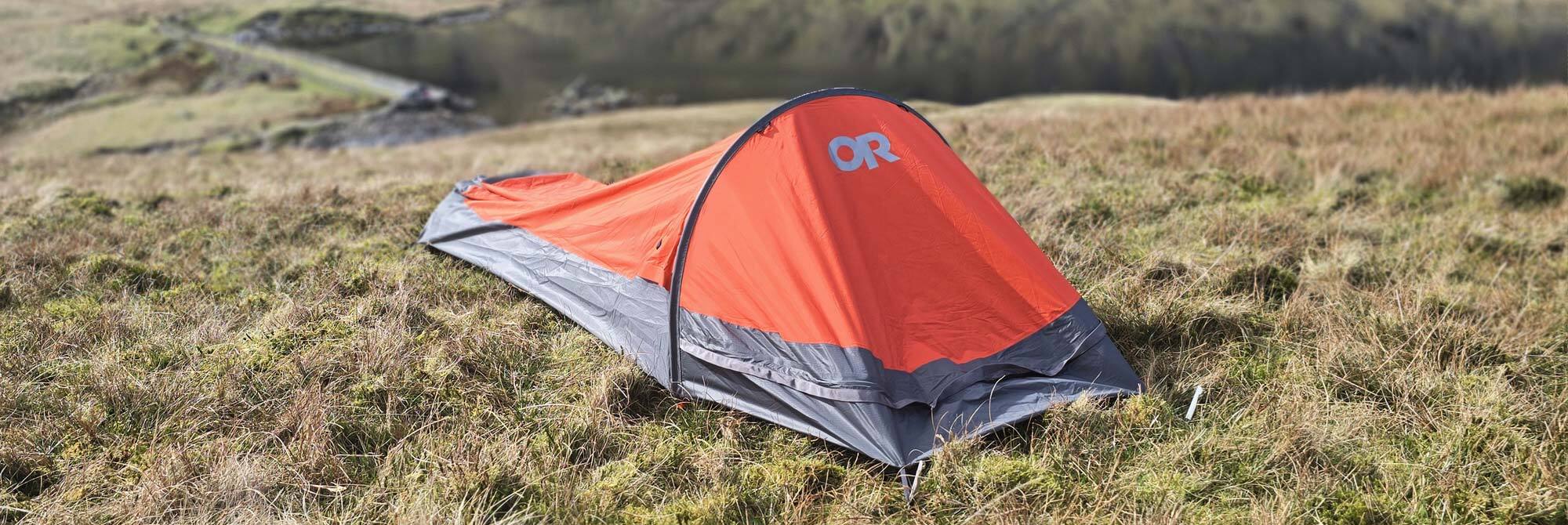
The Outdoor Research Helium UL Bivy makes the most sense when you want the smallest possible weatherproof shelter, a quick pitch and a really low-profile camp. It is more livable than most bivy bags I’ve tried, thanks to the hoop, which elevates and provides welcome space, but it is still very much a bivy. That means limited living space, careful venting and being realistic about condensation when deciding where and when to use it.
The Helium UL Bivy is a solo shelter for fast trips and low-profile camps, with its biggest draw being its compact packing and simplicity. Put the single pole in, stake it out, get your mat and sleeping bag inside, and you have a protected place to bed down with bug protection and enough head clearance to avoid the worst of the coffin-like feel of a traditional bivy bag.
I think it works best when you treat it as a place to sleep rather than a place to camp, for short trips and quick overnighters where footprint and speed matter, the design makes sense. I can see it working well for races, ultras, fast-and-light backpacking and after-work micro-adventures where you just want to get your head down.
What’s Changed
The Helium UL is a refinement of the previous Helium Bivy, adding a few new features and a new face fabric. Interestingly, it is actually heavier than the previous model, which is not something I get to say very often with UL gear. The older version used Pertex Shield Diamond Fuse and weighed around 479g, while the new Helium UL Bivy uses Pertex Shield NetPlus and weighs around 530g.
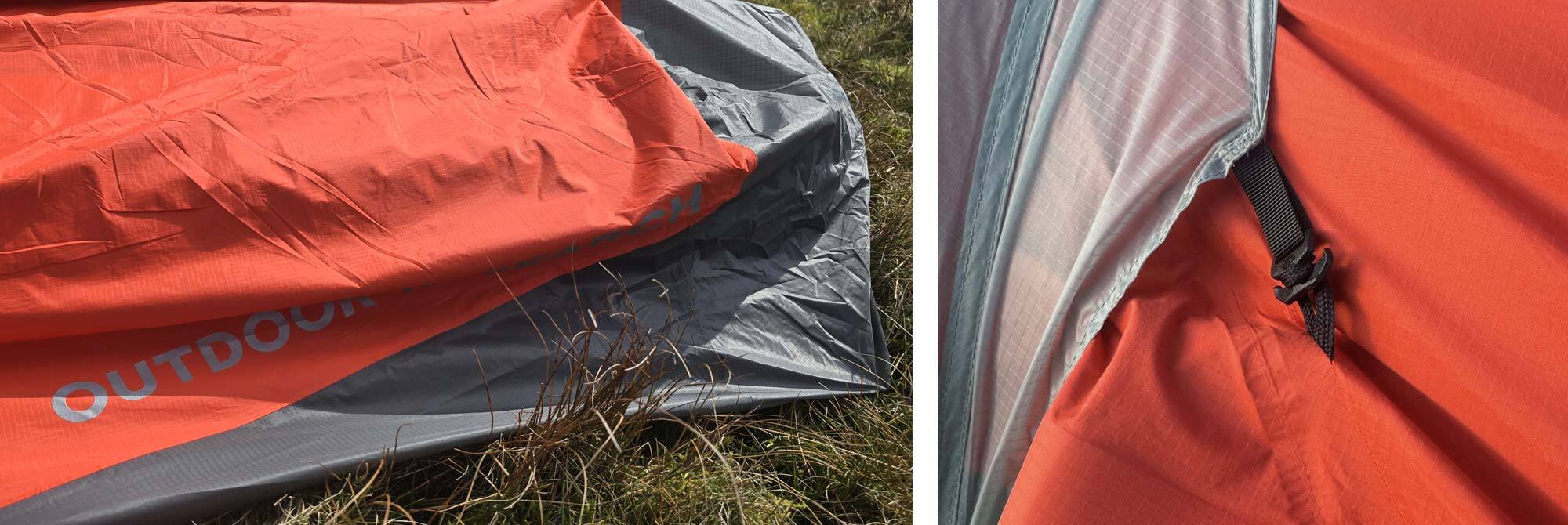
The changes are mainly aimed at liveability and breathability. The new version has dual passive vent flaps at the shoulders, six stake loops instead of four, and a wider shoulder area, which makes larger mats much more viable. You also get the option to add the dedicated Helium UL Vestibule.
The six stake loops are split between the head, shoulders and foot, although only four pegs are included. That makes the bivy more configurable and potentially easier to manage in mixed weather, but it is not a pure weight-saving update.
Design and Setup
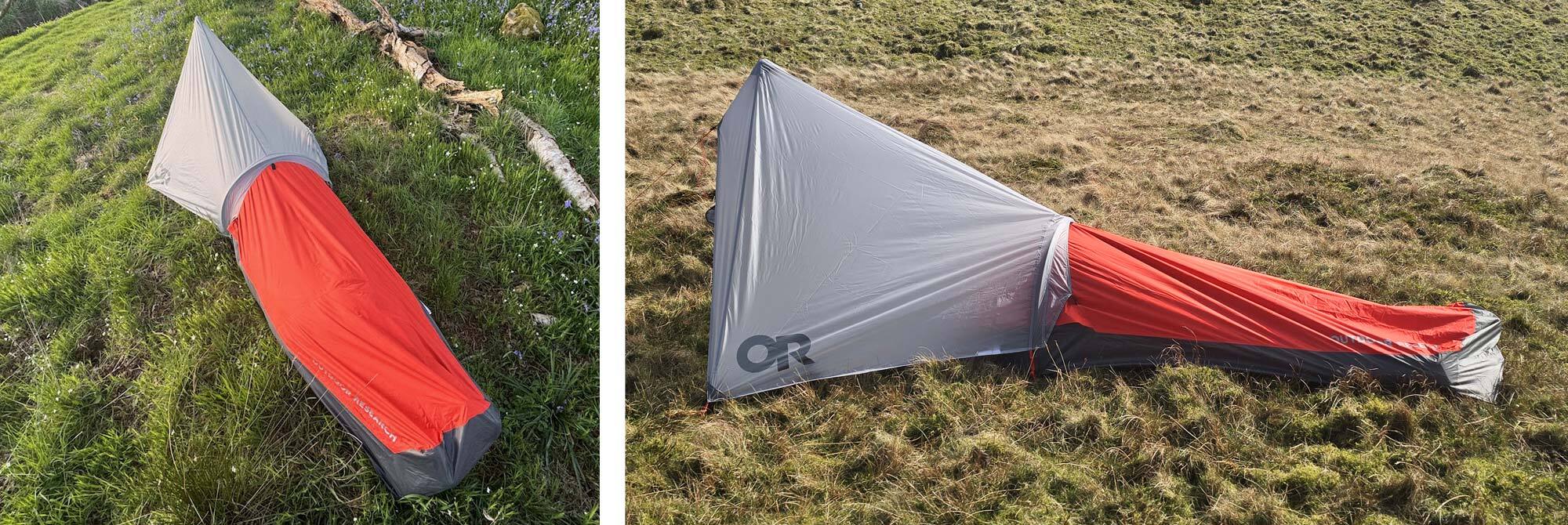
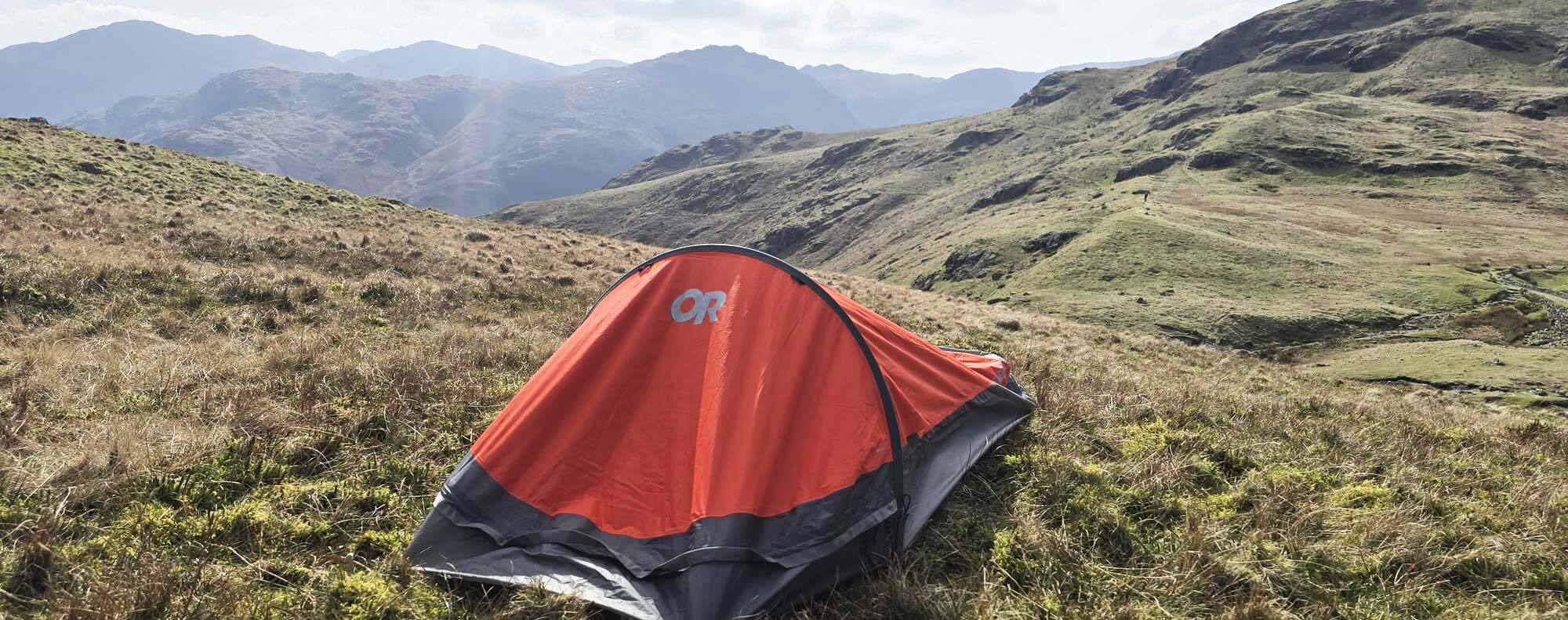
The basic design is very straightforward. A single hoop at the head lifts the fabric away from your face, while the body tapers down towards the foot end. The clamshell-style opening makes getting in and out easier than with a basic bivy bag, although it is still not exactly graceful. The mesh panel also gives you insect protection when you want airflow without fully sealing the shelter.
The small footprint is one of the biggest practical advantages. It needs far less space than even a compact solo tent, so it is easier to use on narrow, uneven or awkward pitches. Setup is quick, too. There is very little to think about, which makes it appealing for late finishes, poor light or trips where you do not want the faff of putting up a tent.
Interior Space and Mat Fit
I did a fair bit of testing here. Being lucky enough to have a showroom full of sleeping mats, quilts and sleeping bags, I tried the Helium UL Bivy with a decent spread of different sleep systems, including rectangular, regular, wide and long sleeping mats. I was pleased to see that they all fitted comfortably, which surprised me, as bivvies often become awkward once you move beyond a standard-width mummy mat.
I also tested the setup with the largest down sleeping bag we had available, a Sea to Summit Trek -18°C Down Sleeping Bag, which weighs 1894g in Regular. For context, I am 6ft 1 and around 15 stone, and with a full-length, wide, 10cm-high mat, the setup actually worked for me. I could comfortably toss and turn and did not feel that restricted.
My slightly taller colleague, who is also broader in the shoulders, found it harder to get in and out of the bivy with such a bulky winter bag. So larger users, or anyone using a big cold-weather bag, should take that into account.
Weather Protection and Condensation
No matter the bivy or the mitigations built in, airflow and condensation management will always be an issue. The Helium UL blocks wind and light rain well, but it is still a single-wall bivy, and condensation is part of the deal.
For me, this works best in lighter rain. If I were expecting a proper downpour, I would use a tarp as well. That is partly about comfort and partly about airflow. In heavy rain, you are more likely to shut everything down, and once you do that, moisture management becomes much harder.
The new vent flaps are a good addition because they give you more ways to keep air moving, but they do not remove the basic bivy compromise. Footbox dampness is what I would watch most closely, especially with a lofty sleeping bag pressed against the shell. I would still like to see a vent at the foot end of the bivy, as I think it would add a useful amount of airflow without much extra weight.
This is why I think synthetic insulation has some real merit in a bivy. If you do get some moisture build-up, a synthetic quilt or sleeping bag is generally more forgiving to manage than down. That said, I would not rule it out. A down bag is still perfectly viable, especially for shorter trips where you are not dealing with repeated wet nights.
Vestibule and Storage
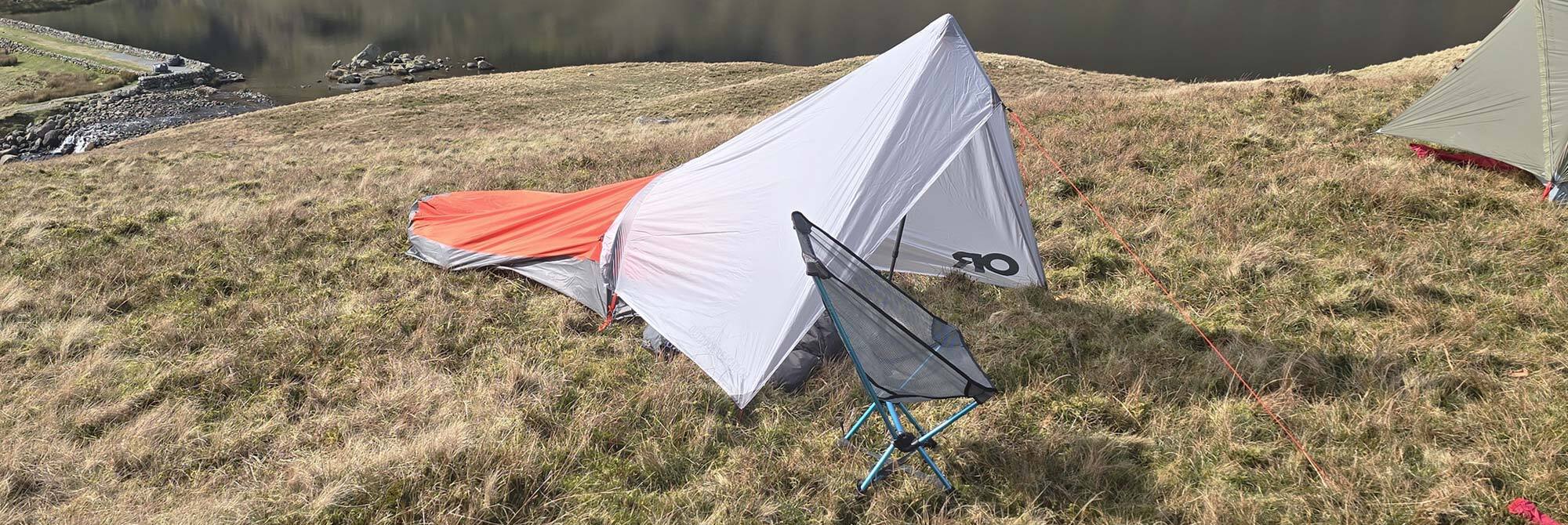
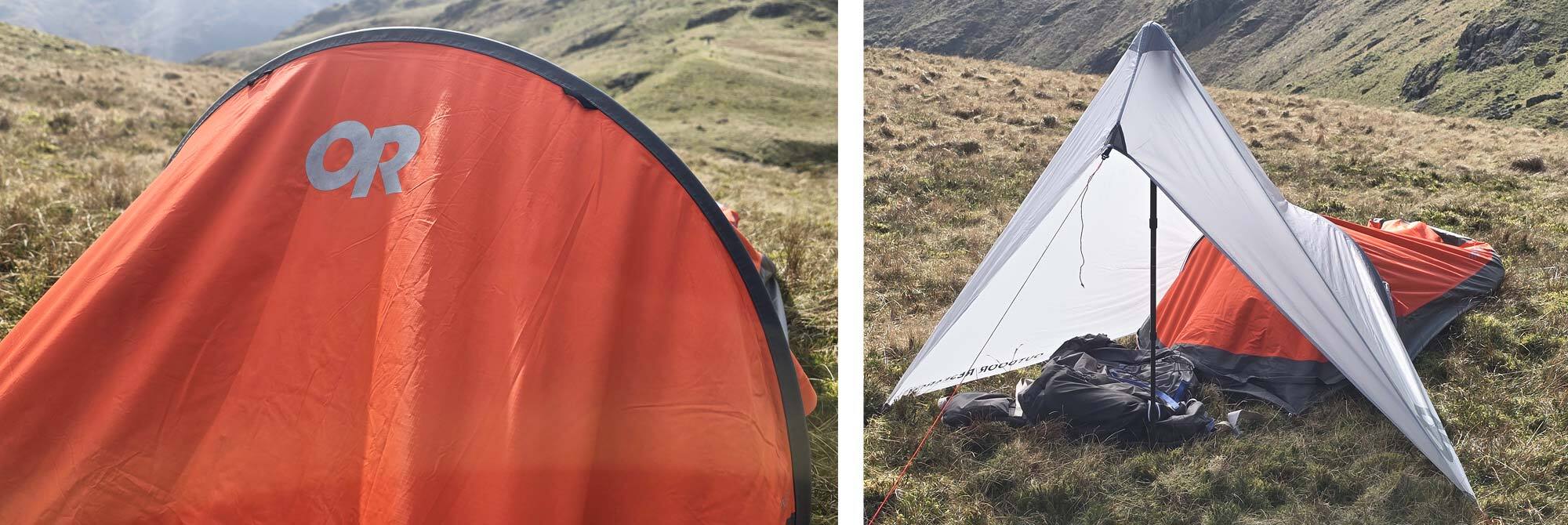
One of the useful changes to this year’s version of the Helium is the attachment point for the new Helium UL Vestibule (sold separately). For me, this changes the whole bivy experience. On paper, it gives you somewhere to keep gear outside the bivy and a more sheltered space for cooking. In practice, the bigger benefit is that it lets me open the face covering more confidently in poor weather, which massively improves airflow and should help reduce condensation.
It also opens up the bivy and somehow makes it feel less enclosed. The only real drawback is that it blocks your view of the stars, which is one of the big draws of bivy camping for me.
It does need a trekking pole, and it brings the full system weight to around 690g, which weakens the weight argument. At that point, some solo tents start to look more livable for a similar or lower weight. Even so, I think the vestibule is a worthwhile option if you like the bivy format but want a more forgiving wet-weather setup.
Internal storage is minimal, as expected. Most organisation needs to happen outside, in dry bags or under the vestibule if you add it.
Durability and Fabrics
For a lightweight bivy, the fabric choices feel sensible. The 40D floor is reassuring, especially since it will take the most abuse. I would still be sensible with where I pitch, but it does not feel worryingly fragile.
The 30D upper keeps the weight and pack size down while still feeling appropriate for this type of shelter. For fast trips, compact packing and careful campsite choice, the balance feels about right.
Who it suits
For me, the Helium UL Bivy makes the most sense for one-night micro-adventures. The kind of trip where you finish work, head into the hills, sleep out, and come back down the next morning. It also suits trips where you are being really pack-conscious, want to cover a few summits, and like the idea of a night under the stars without carrying much shelter weight.
I am not a racer, and I do not do ultras, but I can absolutely see it working well for that world too. The tiny footprint, fast setup and compact pack size all make sense for people moving quickly and keeping camp as minimal as possible.
Personally, I would be happy using it for one night. Two nights would be a push, and anything more than that would not really work for me. That is not a criticism of the bivy as such, it is just where I think the balance sits between packability, protection and comfort.
Final Thoughts
The Helium UL Bivy’s strongest features are its fast setup, small footprint, low profile, proper bug protection and better-than-basic headroom. The updated vents, wider shoulder area and extra stake loops all make sense in real use, even if the new model is heavier than the previous version.
Its limitations are just as clear. It is cramped compared with a tent, condensation needs active management, storage is minimal without the vestibule, and I still think the foot end would benefit from more airflow or structure.
For me, it is at its best as a focused shelter for short, fast solo trips with minimal camp life. I like it most for quick overnighters, low-profile pitches and those nights where getting out under the stars matters more than having a roomy shelter.
 |
||
 |
||
| Andy Neil |
||
|
Andy has been a keen long-distance hiker and wild camping enthusiast since he completed the Cleveland Way in 2015. Since then, he has walked thousands of trail miles all over the UK and is an active member of the Wild Camping UK community, being an admin of the largest wild camping community on Facebook. He strongly advocates for responsible wild camping and believes it is important to leave no trace when camping in the wilderness. He joined the UOG team in 2021 and works as a website developer and content creator. |
||