
Wechsel Zephyr 1 Review - ''At only a whisker over 1kg, it’s a light tent for the amount of room inside. The pack size is compact with the shorter 39cm pole length.''
Posted by Danny Pearson on Aug 06, 2026
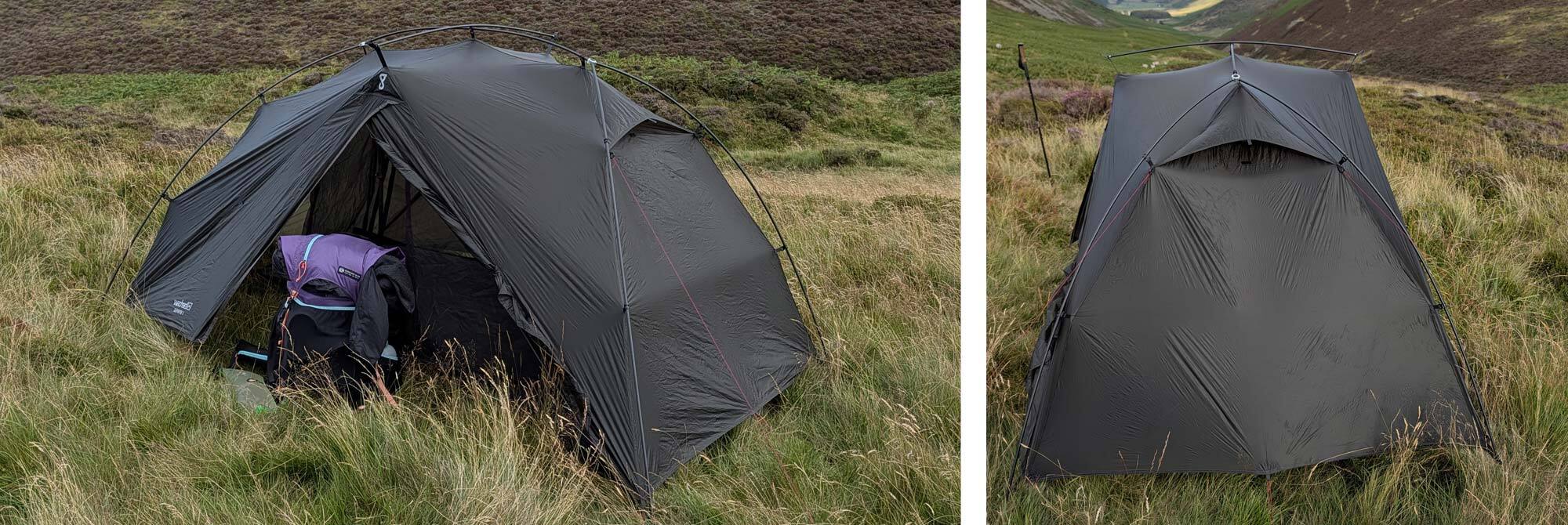
I often read people's posts on social media anytime an inner pitch first tent is shown, stating with absolute authority – “You can’t use one of them in the UK." The reality is that simply isn’t true. We sell more inner pitch first tents than anything else at Ultralight Outdoor Gear. They are usually lighter, have more head height than external poled tents and can be pitched quickly enough that rain is never a problem. If it gets a bit wet, then the mesh or inner fabric dries really quickly.
Personally, I use both styles of tent but there are occasions when the simplicity and ease of pitching of a pitch as one tent is certainly appreciated. There haven’t been many roomy and light external poled tents available; they’ve mostly been 4 season or heavy. The Wechsel Zephyr tents change that within our range.
Having had the chance to test the new Wechsel Zephyr 1P here are my first impressions.
The quality is what we’ve come to expect from Wechsel. I already own the Wechsel Exogen 1P and Bella 1.5P which I’ve enjoyed using for several years. The Exogen is a 3+ season inner pitch first tent, and the Bella 1.5P an externally poled, roomy tent, but it’s not that light.
However, with the Zephyr you have an externally poled tent that is enormously spacious and also light.
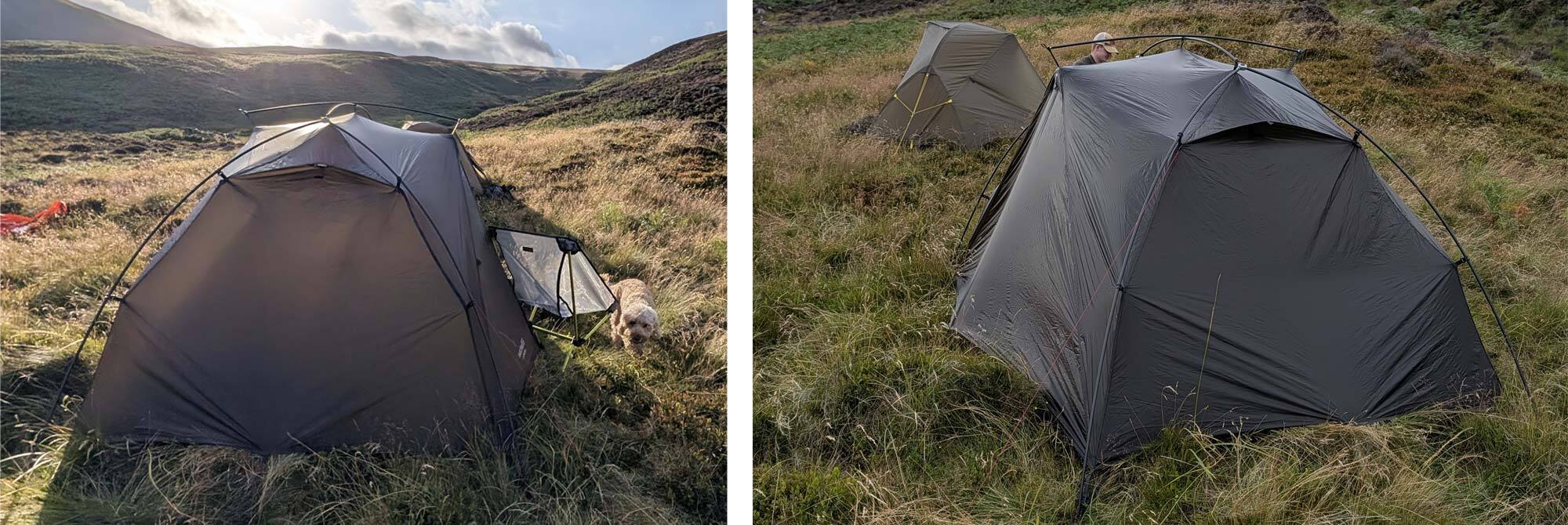
This is an extremely roomy tent for 1 person. Inside there is enough space for a long wide mat plus enough leftover to fit loads of gear due to the asymmetrical inner. This is a design that Wechsel have used before on their Tempest tunnel tents to increase space in the inner. It has been compared to Durston’s X-Dome, but Wechsel were using this idea long before that tent appeared.
The headroom is impressive even when sitting on a deep air mattress thanks to the 110cm internal height. Taller people should have no problem with this tent lying down or sitting up! I was a bit worried that this increased height would cause problems in stronger winds, but so far, it’s performed well.
There is a big pocket across the width of the head end of the inner tent which kept its structure without sagging even when several items were stashed in it.
The vestibule is one of the biggest I’ve seen on a 1-person tent. The optional footprint comes with a separate bathtub storage area that can be clipped into the vestibule to keep things off wet ground, but even with that fitted there is still a huge amount of space left over.
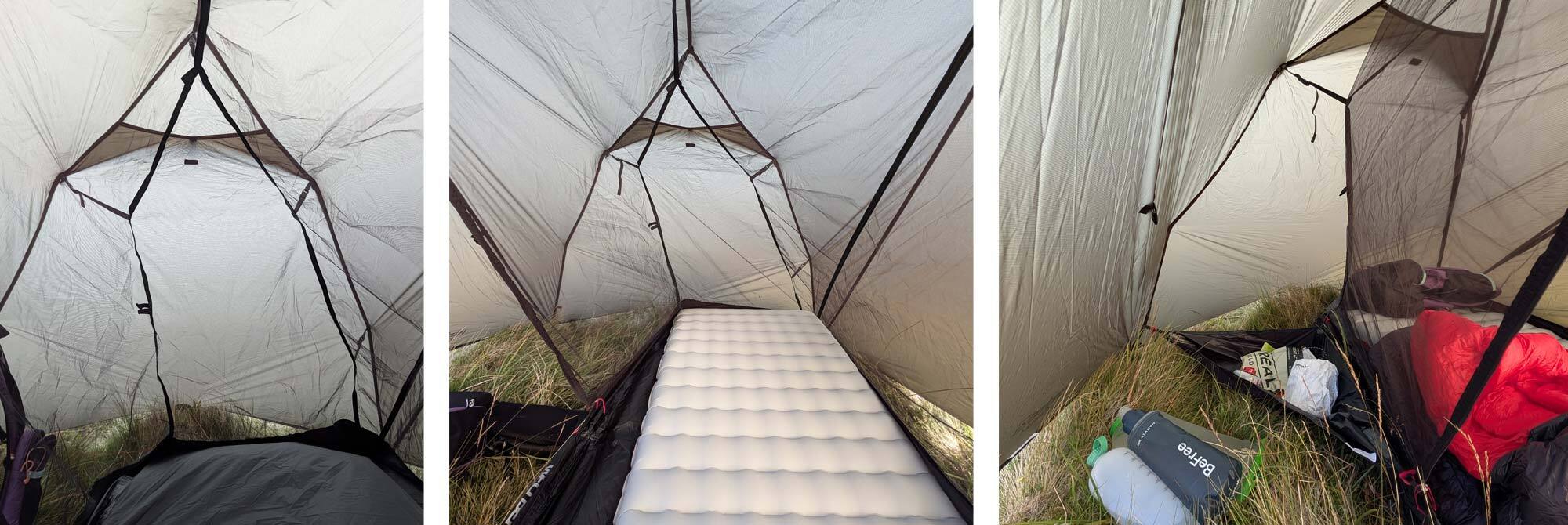
I haven’t used the Zephyr 1 in extreme winds, it’s not really intended for that type of camping but during 20mph gusts the tent hardly moved. That was with the 4 guy lines in place and trekking poles added in the holders on either side of the ridge to add stability. The addition of trekking poles makes a big difference to the structural rigidity. If using trekking poles, I would just set it up like that every time. In the wind, the fabric of the large side opposite the door would be pushed in a little when hit from that side but with so much spacing between the inner and fly it never made contact. With the trekking pole in place, this further held the fly away from the tent. It uses carbon fibre poles and comes as standard with both a pole repair sleeve and also a spare segment. Having said that, with the trekking poles added the poles never felt stressed even on a blustery night.
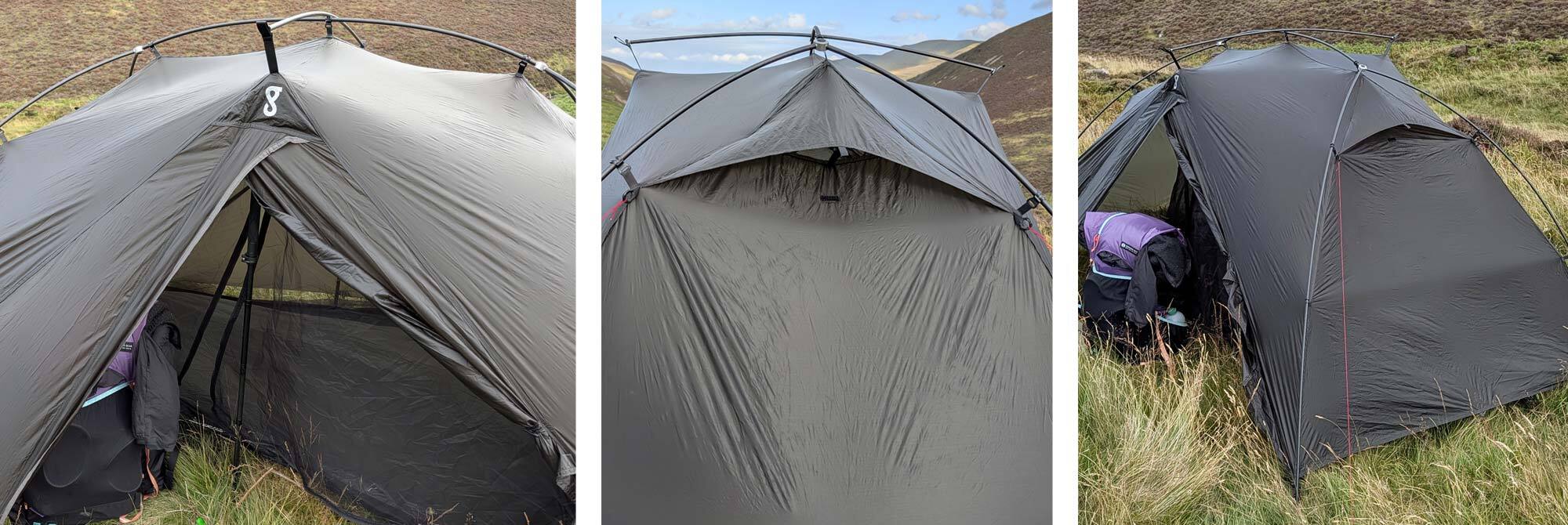
The materials used are ideal for UK weather with a 3000mm hydrostatic head on the fly and 5000mm in the floor. Wechsel are a German company, so their tents suit Northern European camping.
You can pitch the Zephyr 1 pretty close to the ground with webbing buckles on each corner to adjust the flysheet. It’s a weatherproof set up but with its full mesh inner, it is best suited to milder conditions unless you don’t mind a bit more airflow in cold weather.
There was no condensation during my camps, but I think that’s largely down to the dry and windy conditions. The full mesh plus the ability to adjust the space of the flysheet from the ground and decent vents at either end should make this tent better than average at minimising condensation. Being sil/sil fabric any condensation that does form will be more noticeable compared to a PU coated flysheet. I’m yet to find a tent that doesn’t suffer in certain conditions.
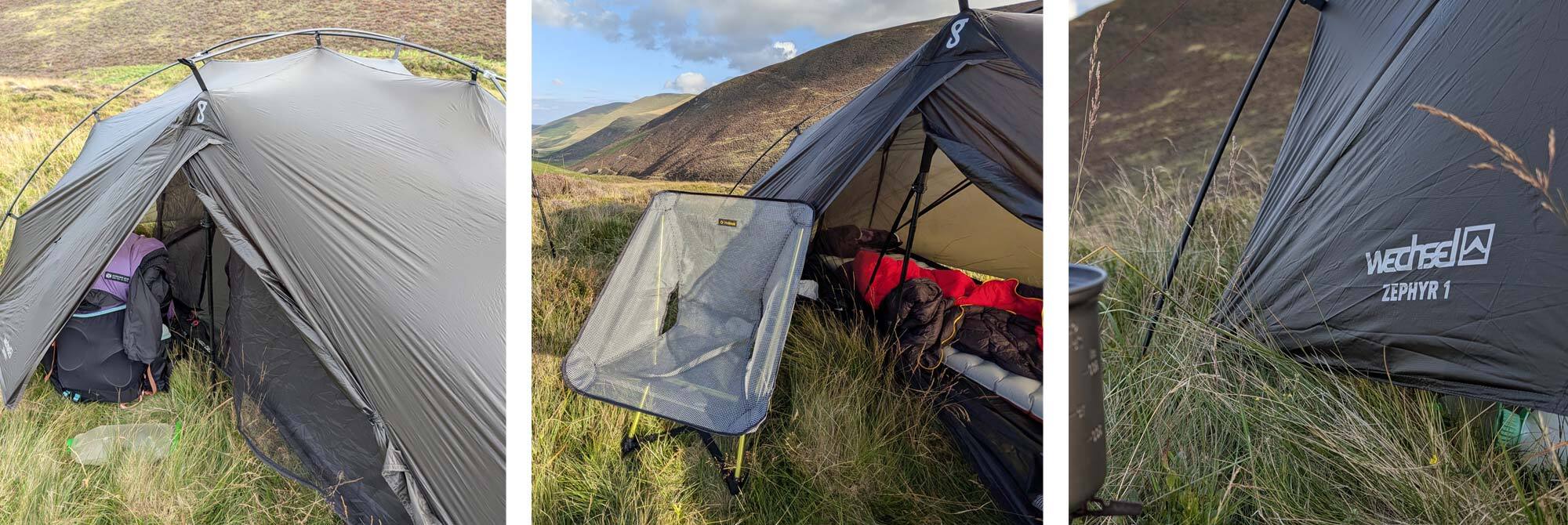
The Zephyr isn’t seam sealed. It uses a similar seam construction to tents from the likes of Hilleberg and Nordisk and utilises cotton-coated polyester thread that swells when wet to seal the seams. Wechsel suggests sealing the seams and even include a small tube of silicone sealant. I seam sealed my Wechsel Exogen 1P, but I don’t think I needed to. I don’t know of anyone else who has bothered, and I haven’t heard of leaks. My suggestion, if you are taking the tent somewhere where it will experience sustained rain day after day, then you might do it; otherwise just get out and use it.
At only a whisker over 1kg, it’s a light tent for the amount of room inside. The pack size is compact with the shorter 39cm pole length.
The Zephyr is a versatile tent; it’s lightweight with the short pack size making it equally suitable for bikepacking or backpacking.
 |
||
 |
||
| Danny Pearson |
||
|
Dan is a keen distance walker who loves to geek over the latest gear. In the last few years, Dan has completed a couple of TGO Challenge crossings of Scotland, GR221 in Mallorca, Dales High Route and Hadrian’s Wall plus countless other self-planned routes. A keen mountain biker but finds he doesn’t bounce so well these days when the inevitable happens. |
||