
About MSR
Posted by Mark Richardson on Jan 29, 2026
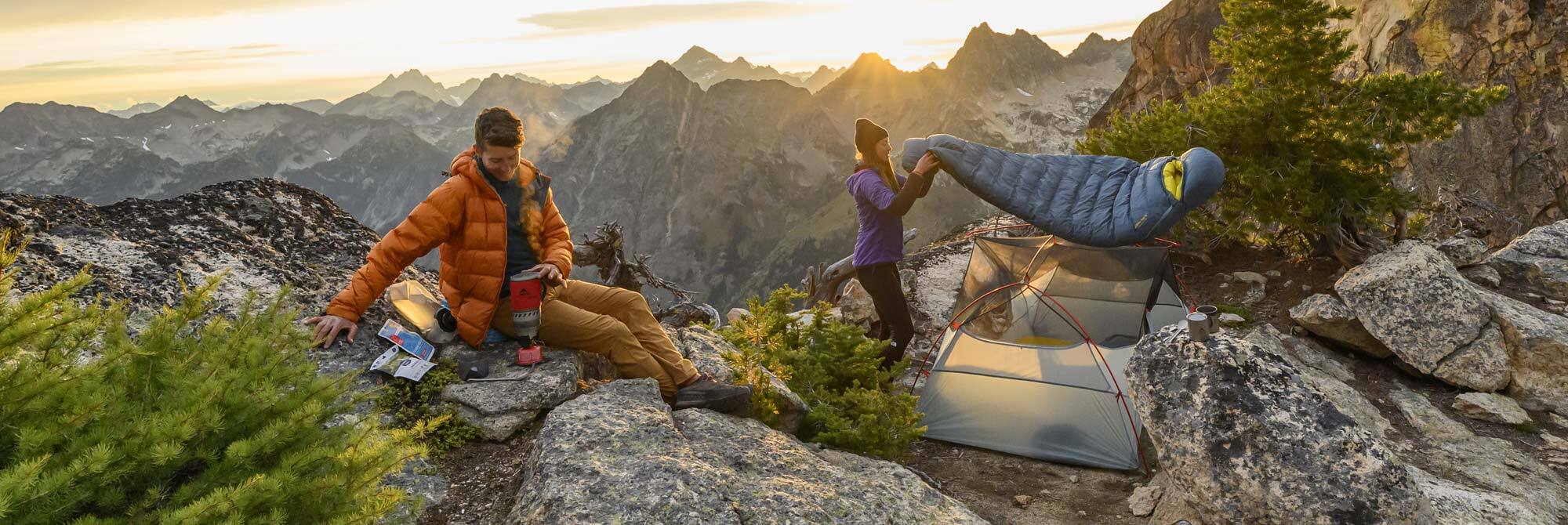
Forget About Starting a Company with a Product — Mountain Safety Research
Began as a Crusade.
Lifelong mountaineer Larry Penberthy formed MSR with a single purpose: to improve the safety of climbing equipment. It was the 1960s, and the Seattle engineer’s independent field tests had revealed that gear was often failing at loads far lower than its advertised specs.
Fired up, Penberthy set out to change the industry.
That one-man crusade grew into a pioneering gear company known for its cutting-edge engineering. Today, many MSR inventions are ubiquitous—remote-burner camp stoves, pit zips on outerwear, cycling helmets. But more important are the historic expeditions and outdoor adventures they’ve helped unlock around the globe.
Timeless Quality Built In
At MSR, they are engineers, tinkerers, and passionate outdoor users—each with strong perspectives on how a product should work based on their own experiences in the wild places they love. Collectively, they believe that innovative solutions are bred by challenging convention, and that functionality, simplicity, and reliability are the governing elements of enduring design. Today, many MSR products are still hand-built on manufacturing lines just a floor below where they conceptualize them. They remain driven to engineer gear for those who believe a trusted companion can be as simple as a 20-year-old stove that burns strong on family backpacking trips, or a water filter that provides the safe hydration needed to fuel the greatest expeditions into the farthest reaches of the globe.
Manufacturing & Social Responsibility
MSR strives to leave an increasingly positive handprint on the world in which we create and use our outdoor products, and our Manufacturing and Social Responsibility Report outlines our responsible actions to date and path for the future. We are committed to minimising the social and environmental impacts of our products, suppliers and operations through better materials, safer chemicals and smarter packaging.
MSR is a founding member of the Outdoor Industry Association Sustainability Working Group, a coalition of more than 300 outdoor brands, suppliers and manufacturers dedicated to addressing our most important sustainability challenges. This group launched the Higg Index, our industry’s first sustainability measurement tool. MSR is one of the first hard-good brands to voluntarily use the Higg Index to examine our practices in material traceability, chemical management, social responsibility and other core competencies.
MSR's Origin Story
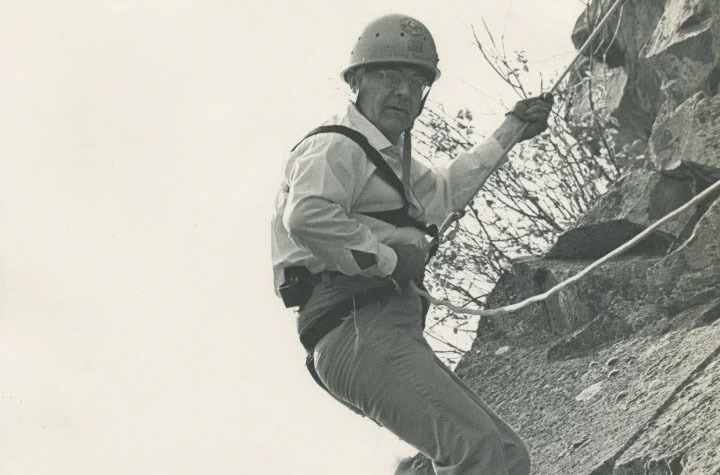
Inquisitive Origins
In 1968, Seattle mountaineer and engineer Larry Penberthy had been independently testing safety gear at The Mountaineers, a local non-profit, and his findings often demonstrated disconcerting results. While Penberthy’s studies raised awareness, The Mountaineers lacked the wherewithal to further support his work. So, in the spring of 1969, Penberthy founded Mountain Safety Research, Inc. with the goal of independently evaluating climbing equipment and innovating ways to make it safer and easier to use.
The MSR Logo
Long before he founded MSR, Larry Penberthy toiled in a mine outside of Holden Village, a remote encampment in the Cascade Mountains along the banks of Lake Chelan. On his off days, Penberthy made forays into the surrounding jagged peaks and on several such endeavours put in new routes up Bonanza Peak, the region’s crown jewel. Enamoured with the mountain, years later when Penberthy founded MSR, he sketched an outline of Bonanza’s profile—a crude drawing that became the company’s first logo.
Acute Mountain Sickness
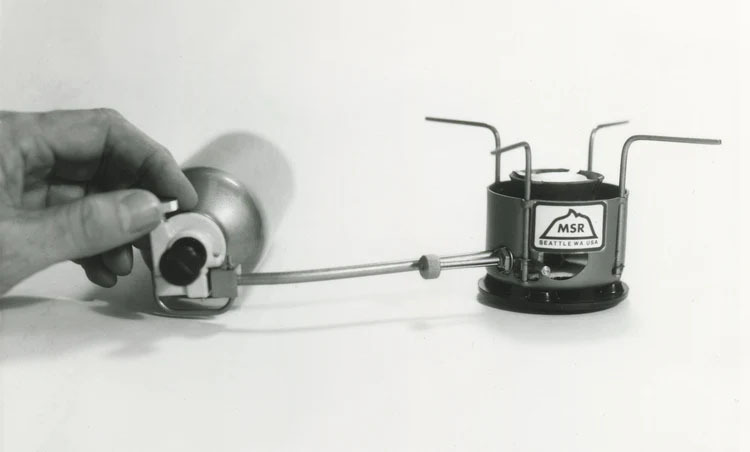
Larry Penberthy climbed Mount Rainier so frequently that he lost count. His experience made him realize: climbers need to be able to quickly melt snow for drinking water. The observation led him to design his revolutionary Model 9 mountaineering stove.
Throughout the summers of 1975-77, Penberthy encouraged more than 100 fellow climbers to follow a four-part AMS preventative plan that he’d devised. Penberthy published his survey findings in a 24-page booklet on AMS research. His goal was to help climbers increase their safety through “better mental alertness and physical ability”.
Tent Testing Then & Now
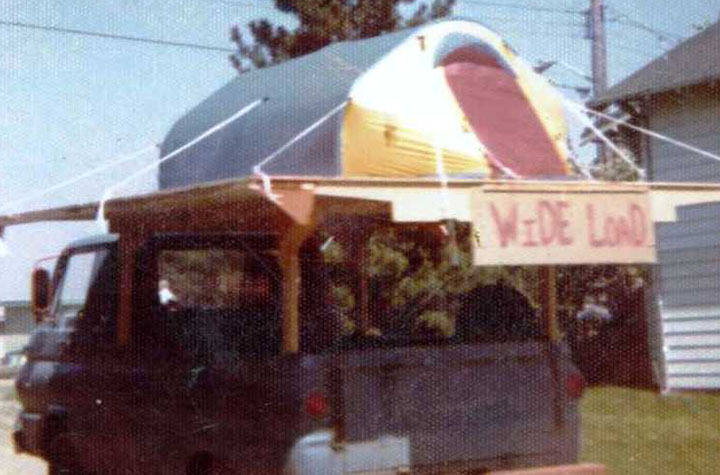
In 1973, Larry Penberthy was determined to test his newest innovation—the MSR Mountain Tent. But he lacked a wind tunnel to subject it to a proper fusillade of gales. So, he bolted a platform to the back of a pickup truck, obtained a Wide Load permit and started exposing the tent to 60-plus mile-per-hour winds on the local highways. The result, a double-walled, barn-shaped shelter, quickly became a backcountry icon.
Today, the company uses more sophisticated testing machines, but that dedication to R&D is embedded in MSR’s DNA.
XGK Stove & The California Condor
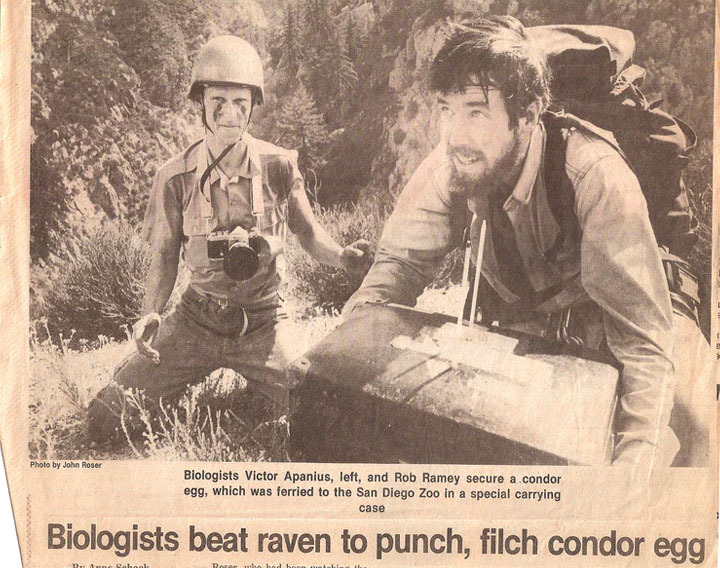
In 1984, with the California Condor on the brink of extinction, biologist, and Yosemite big wall climber Rob Roy Ramey got the call to join an important egg relocation project. This was part of a large-scale captive breeding program to save the iconic bird.
In addition to his climbing skills, Ramey’s XGK stove played a key role. In the field, it was used to the heat water that kept the eggs warm during a helicopter transport from their nests in the Sierra to the San Diego zoo. The stove was chosen, Ramey says, because of its “100% dependability.” Today, more than 400 California Condors exist in the wild.
Lifelong mountaineer Larry Penberthy formed MSR with a single purpose: to improve the safety of climbing equipment. It was the 1960s, and the Seattle engineer’s independent field tests had revealed that gear was often failing at loads far lower than its advertised specs. That one-man crusade grew into a pioneering gear company known for its cutting-edge engineering. Today, many MSR inventions are ubiquitous—remote-burner camp stoves, pit zips on outerwear, cycling helmets. But more important are the historic expeditions and outdoor adventures they’ve helped unlock around the globe.