
Nick's Interview with Brian Beckstead, Co-founder of Altra
Posted by Nick Brown on Oct 26, 2026
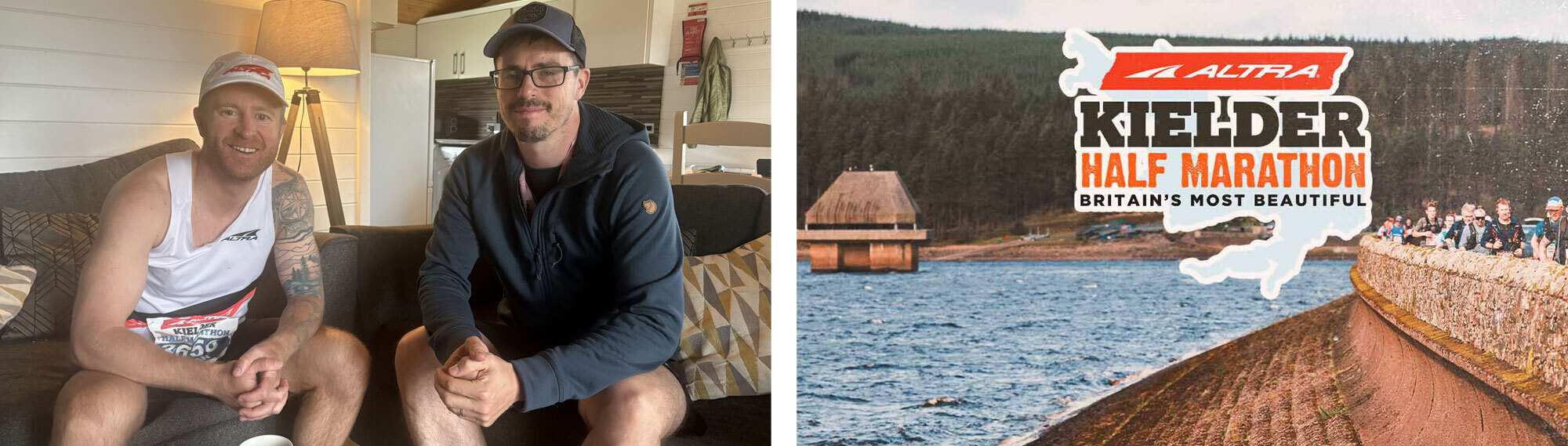
I recently went to run the Kielder Half Marathon in Northumberland, sponsored by Altra. After the race, I got to sit down with Brian Beckstead, the co-founder of Altra, and ask a few questions about the history of the brand as well as where he feels it is heading. Brian also ran in the half marathon.
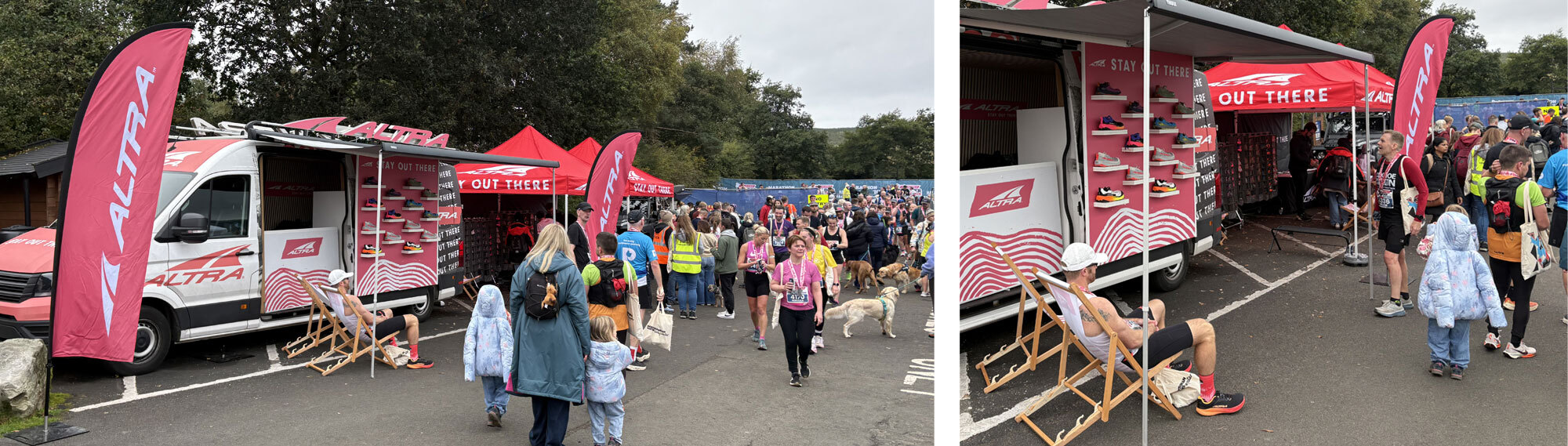
UOG:
So how did you find the race?
Brian Beckstead:
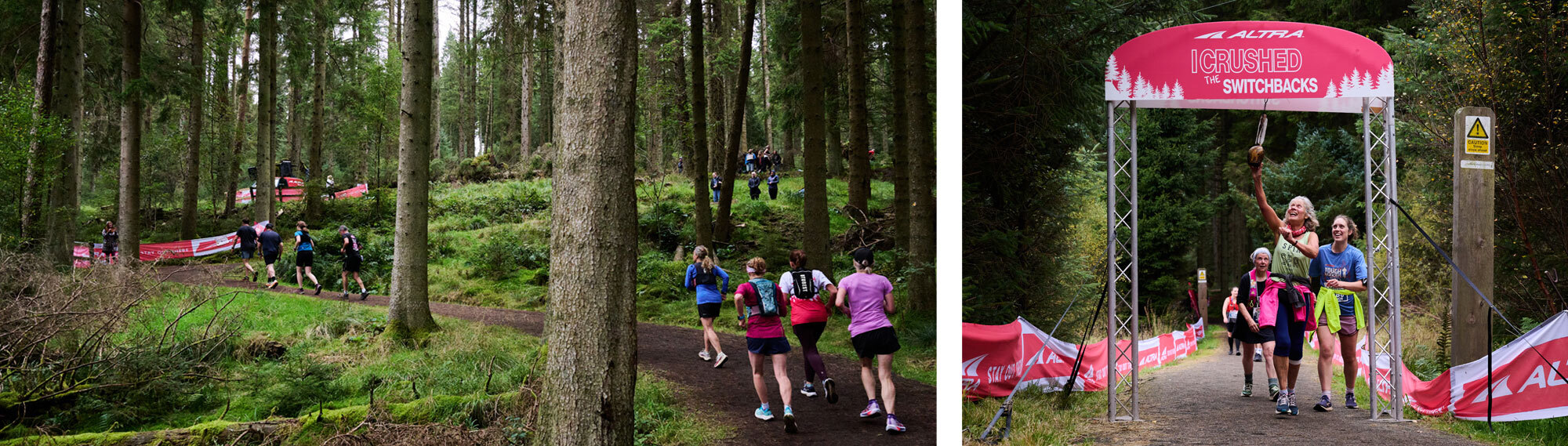
I very much enjoyed it. I think that the pathway, it was just so fluid. Obviously, you have the switchbacks which are a little steeper.
UOG:
Yeah, I wasn't prepared for that.
Brian Beckstead:
I was prepared because they all warned me. I thought the trail was nice, it was soft, it was really lovely. My particular favourite was towards the end of the race with the pine forest. It gives you the atmosphere.
UOG:
What were your shoes of choice for this?
Brian Beckstead:
I was running in the brand new Torin 9. I've put a lot of miles in the Torin over the years. It's kind of my go-to.
UOG:
Would it still work for a full marathon?
Brian Beckstead:
Oh, I think it's perfect for a marathon. I love the Torin. Kind of my go-to for cushioning, and I do like to do a lot of training in them, but also for my longer runs.
UOG:
I used the Olympus 275 Hilo's and absolutely loved them, really tough shoe.
Brian Beckstead:
Yeah it's such a versatile shoe too. It can handle technical trail and it works well on gravel to.
UOG:
It felt good on the hard ground as well.
Brian Beckstead:
Do you know what the 275 means? When we started out it is the temperature, in Fahrenheit, we would put the shoe in the toaster oven. It is hot enough to heat the shoe up internally without frying the shoe laces. The goal was to soften the glue so you can peel the shoe apart. At that temperature you can take the outsole from the midsole and that from the upper so you have three pieces. So we would see what was on the inside and modify the shoes. So that's kind of a nod to our past.
UOG:
Which meant you can then tailor it and tweak it.
Brian Beckstead:
So we modified other brands, which then inspired us to create our own.
UOG:
So back to the beginning. What was your motivation for going out running? Was it for fitness or mental health? Did you run from a young age?
Brian Beckstead:
Yeah, we were a family of runners. I have six older sisters. Five of the six were runners.
UOG:
Quite competitive as a family.
Brian Beckstead:
Yeah, a couple of them were competitive, a couple of them were more casual, but my dad was a pretty consistent runner. My dad is very disciplined, every Monday, Wednesday and Friday, and Saturday was a 10K. That was what he did. for decades. That was just his routine and his thing. And so when I was a kid, you know, I think I had a little bit of talent to start, but then coming from a family of runners, it was kind of just... And it was funny because I ran in middle school, you know, 12 and 13, and I was fairly competitive. And then, you know, things happened and I kind of lost interest during my teenage years. You want to rebel against that. Then when I started at a brand new school I found out you can take running as a school credit. That's pretty cool. Instead of physical fitness, you can take running. So I showed up to class the first day. The running team just kind of adopted me, and I ended up meeting on that first day, Golden Harvard, who I went on to start Altra with. And then from there, I fell purely in love with it, and it's continued.
UOG:
You worked in a running store, didn't you?
Brian Beckstead:
In a store called Runner's Corner.
UOG:
And you saw a niche in the market?
Brian Beckstead:
Well, I mean, I worked there for almost 10 years, before any Altra type of things happened. I started working, I was 16 years old. I went sales person to shoe buyer to manager. And it started with a lot of our research on biomechanics. I also have severe scoliosis so my posture and alignment meant I was struggling with injuries. And then next thing I know, Golden, who deserves credit for putting first pair of shoes in the toaster oven. He was like, you know what, I'm gonna do it and when he did he called me up. The next thing I know, I started doing it and more people started doing it. And we progressed from the toaster oven to a band saw. The heal was the only thing we chopped. We band sawed through the shoe and then we would belt sand the heel to take the cushion off of the shoe to make it flat, to make it calibrated, to get it to a lower, or zero to lower drop. It wasn't exact but it was like zero to four millimetres, within that range. We just take out that slant and try to get it a little bit more flat and even.
UOG:
And did you immediately notice the difference?
Brian Beckstead:
Immediately. It was like, oh my gosh, this is amazing. And we started selling those multiple shoes. And then the people who bought them loved them. They started telling their friends, he told their friends, and the next thing I know, we are selling hundreds and hundreds.
UOG:
The companies whose shoes you were chopping up, did they ever say, what are you doing?
Brian Beckstead:
Well, yes and no. So we got nervous about it. So we basically started contracting a shoe repair person to do it for us so that we weren't the ones modifying them. We would sell people a pair of shoes and take them across the street to a shoe complex. 20 bucks for them. So that's how we separated. But what we did do is we went to all these shoe brands that we were modifying, we went and pitched them the ideas for Altra. We didn't have any plan to start a shoe company. We were trying to convince the other brands to make it for us. So we gave them the zero drop and the wide foot box. We gave them all the ideas but they didn’t take it on.
UOG:
So where did the big break actually happen and you realised you could do this yourselves?
Brian Beckstead:
Yeah, well, that's where the third founder comes into play, Jeremy Howlett. We had a conversation and we were kind of just toying with the idea and then we made a pitch and we were really lucky to find an angel investor who gave us a little bit of initial capital and that was that. Little did we know, we could not find money after that. It took us like another year and a half to find any form of money. In the process, I mortgaged my dad's house to get the next sample. The risk is real but all the momentum and the excitement and our belief in the concept, it grew. Despite all the haters, despite all the people that said it wasn’t going to work. We got so much crap for all that.
UOG:
But previous customers were coming back for more?
Brian Beckstead:
That's it, yeah. A lot of people think of us as a trail brand, but our first shoe was a road shoe. The second shoe, of course, was a Lone Peak and which just took off and so the trail runners really adopted that sort of thing, which was real fun and then the thru-hikers were a happy accident. We had zero marketing. We had nothing. It was like 2014, and all of a sudden, a bunch of people got a hold of them on the Pacific Crest Trail. And it became this overnight sensation.
UOG:
And they realised that you didn’t need to take big boots anymore.
Brian Beckstead:
Well, and here's a fun thing that's going to tie into your Ultralight story. The year before starting Altra, Golden Harper and I just graduated university in 2008, and we hiked, fastpacked, the John Muir Trail. We were averaging 29 miles a day and it was great. And so, you know, I am actually a backpacking instructor. I've taught backpacking courses at university level. I've been backpacking with my father since about seven years old. My children and I, I've got three kids, and my wife, we go backpacking. We do 30 mile backpacking trips every summer with my little kids. My daughter, when she was seven, she did a 27 mile backpacking trip. We’re in Utah which is a fantastic place. We're in the Mecca for all that. So we take full advantage and we love it. But yeah, backpacking and the thru-hiking community has always been really receptive of Altra. We love that community. So that was, I think that really helped our growth.
UOG:
What piece of advice would you give when purchasing footwear? Going back to your shoe selling days.
Brian Beckstead:
I think one of the best studies, and this was on footwear and remedies over 20 years, basically track why you purchased the shoe, what’s the purpose. And then did you get injured over the next six months? And the least injured group purchased the shoe because it felt like part of their foot and natural. It wasn't arch support, it wasn't structure, it wasn't cushion. It was ahhh, that feels natural And so I think that's all we at Altra should strive for. We're inspired by the human body. We don't want it to warp your foot. We don't want it to change your foot. We want it to work with the human body, not trying to do anything otherwise. And so that was a big inspiration for us. And so that's the advice I like to give people is when you put it on tight and security does not equal comfy. That's not what we are going for. That's been out there. That is continuing out there. We're trying to get people to say hey there’s a healthier, more natural, alternative way.
UOG:
I have to admit these Olympus 275s I've worn straight out-of-the-box on a few runs and then this half marathon, and they’ve been very comfy and I’ve had no problems with them. Traditionally I have narrow feet, and that was why I would go for a narrower fit shoe however it was a lightbulb moment when I first tried them out.
Brian Beckstead:
We see it all the time, and people try to describe it to us as 'wide-fitting'; I don't love that term. In fact, I feel like our heels will be slimmer than most and our midfoot is very average in terms of fit. We're only looking for space from the metatarsal forward to the toes. So I prefer room for the toes or a healthy amount of little wiggle room in the toe box. I don’t think our shoes necessarily fit wide compared to other brands.
UOG:
But it makes sense when you think of the concept of what happens to your feet during a run.
Brian Beckstead:
And I think that's why we've done really well with thru-hikers and the ultramarathon runners because they do tend to notice that more than if you run a 10K
UOG:
So where do you see Altra heading in the future?
Brian Beckstead:
You know, we're still not particularly well known in the mass market. A lot of people have tried to call us a niche brand. And I don't think we're going to stay that way. We're already breaking out of that right now. We're in the middle of that breakout. And so for us, the future really is trying to get these new concepts out to the mass market, saying that, hey, yes, that there is a healthy alternative to your traditional world of learning. And that's a lot of brand awareness. I think we've gotten much better on our designs. Because Golden and I, or Jeremy, none of us have a background in that. So we have actual good designers and colourists and a really great team there. And hopefully we want to see even more next year. That's where we're going, we’re at a really wonderful stage right now where we're judicious about our spends, but we are aggressive as well.
UOG:
There's obviously more competitors out there following the Altra model.
Brian Beckstead:
There is, yes.
UOG:
How do you stay relevant in that market?
Brian Beckstead:
Well, I think the nice part about that really is that imitation is the best form of flattery in this industry. I think that with us having pioneered the Altra design, I do think that most people recognise that we are the leaders in that category and it really validates what we've been saying already. And so I'm not particularly threatened by competitors. I do think that we do need to stay relevant because at the heart of it we need to ask what's the next brand that's like that Altra. No one saw us coming. They all thought we were this niche little weird brand. So who's the next brand to come up? And can they find that white space to produce something innovative. And so I think we're going to continue to challenge what we can do. We have some really cool carbon plate versions on trial, which I'm very, very excited about. So we're going to continue to use the right materials. We're in a foam war with every brand out there so we're investing a lot in foams to try to make sure that we're lighter more responsive maybe more durable as well.
UOG:
Carbon plates are going to be at the forefront of trail now?
Brian Beckstead:
Yeah, I do think that, and I would advice anyone who's interested in carbon plates to make sure that they recognize that it's a pure performance product. Although I don't think that carbon plated shoes are worth a mass market type appeal, but I think anyone who is interested in a little bit more performance orientation, a little more competitive races, and that doesn't need to be an elite runner too, Carbon plates are great, but I would steer most people away from a carbon plated shoe for a training shoe.
UOG:
That makes sense. So it's more for shaving off those seconds.
Brian Beckstead:
Carbon plate creates an amazing platform for the foam. If you just put a carbon plate in the shoe, it doesn't work. The research on this is quite clear, from other brands, as well as Altra’s research, that the interaction with foam and carbon is the magic. We have a shoe to engage that big toe, because for us, engaging the big toe in any situation with a carbon plate or non-carbon plated shoe is kind of Altra's secret sauce. It is stability. It is power. It is propulsion. If you disengage the big toe you're undoing the foot's natural power.
UOG:
What's your favourite piece of that outdoor kit over the years?
Brian Beckstead:
Let me give you two examples. The Lone Peak shoe. I am so proud of that shoe, the fact that we made it, that it is so different from what anybody else makes, and yet it's an icon. It's enduring. And I'm really proud of that. That's one of the things with Altra that I get credit for, that I probably don't deserve, right? We have an amazing team. I love the team now. It's been a team effort, but I’m really proud of the Lone Peak. From the first edition right out of the gates and it’s continuing, it's such a wonderful shoe so I think that that's pretty cool.
UOG:
We sponsor an event called the TGO Challenge which is a 2 week coast to coast backpacking trip across Scotland. The Lone Peak is still probably the most popular shoe on that event.
Brian Beckstead:
It just works. And I would say the next thing is wool products as layers. I'm a big fan. I think it's a renewable resource. It works well when it's wet. It's obviously not petroleum based. I'm a huge fan. I mean, today my hands get cold pretty easily. So I have a pair of really thin wool gloves that I wore for the race today. And I just love that it's a renewable resource that is something that lasts. It's durable.
UOG:
It’s amazing that we’ve gone back to natural fibres
Brian Beckstead:
It's amazing. Synthetic fibres I don't think lasts as long. It doesn't smell good after use. It doesn't work as well when it's wet. So I am a huge proponent of wool-based products. And not just socks, I'm talking baselayers, gloves, beanies. I think that that is, I love that that's coming back.
It is a touch heavier. But it is so versatile, I'm a big fan, and I use it, like I said, from running to backpacking. I'm a big fly fisherman as well, so use a lot of wool based products for that. We have our sister brand, SmartWool, and I love our partnership with them, and I was a Smartwool fan way before we were connected with the wool product. It's worth it. It's worth the money. It lasts, and I'm a fan.
UOG:
Do you still enjoy running?
Brian Beckstead:
Well, the other thing that's fun right now is watching my kids find a community and finding confidence and finding health and wellness and falling in love with running. So not only do I love running, I love watching other people enjoy running. I was in China a couple months ago and the running community there isn’t any different than it is at home. It doesn't matter what country, continent, anything like that, running is a unifier. And so I love that aspect of running.
UOG:
You've done a lot of races in your time. What was your favourite race you've ever been in?
Brian Beckstead:
I think the one that means the most to me is the Wasatch 100. I finished it four times but I run one of the aid stations now, so I'm a part of the race. And then, you know, it's a shameless plug but it’s on the course. It runs past a lot of mountains and goes straight up the Wasatch Front, right up in Utah, you go straight up. And then you ride the ridge. All the aid stations are in the valleys. So you drop down, get an aid station, you go up, and you ride the ridge again. And there's all these mountains in every direction. And several mountains along the course happened to be Mt Olympus and Lone Peak. So obviously, it affected me and inspired me so much that I named our shoes from those mountains.
UOG:
Do you have any aspirations left?
Brian Beckstead:
You know, I think I mentioned my dad, and I talk about my dad a lot, because he means a lot to me. He ran, he turns 90 next week. He ran his last half marathon at age 81. So I think in terms of aspirations if I can run a half marathon or 10k when I'm 75 or 80. I think that's kind of my goal. I don't in terms of finishing X race or Y race, I've been very lucky to have done so many races across the world and I try to get as mush joy out of those as possible. But my goal is longevity. That's what I want to do. Don't stop. Just keep it going. And I just enjoy it.
UOG:
Fantastic. Thank you.
Read about Nick's experience running in the Altra Kielder Half Marathon and his review of the Altra Olympus 275 HiLo here.
 |
||
| Nick Brown | ||
|
Nick has had a love of the outdoors, especially the mountains, for over 20 years. His passion has led him all around the world on many multi-day treks and mountain climbs in the greater ranges. As well as experiences in harsh environments such as the jungles of Asia and South and Central America and the vastness of the Trans-Siberian railway. A qualified Mountain Leader, he spends most of his time exploring the Scottish highlands and wild areas bagging Munros. On top of this, he enjoys trail running and rock climbing and strongly believes any outdoor experiences are good experiences - no matter what the weather, especially for mental well-being and happiness. |
||